
Navigating WA's May 2026 Solar and Battery Changes: What Perth Homeowners Need to Know
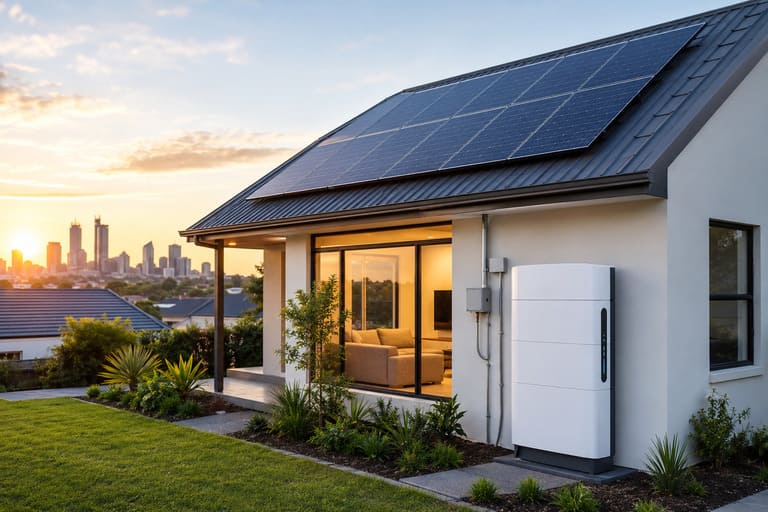
Solar incentives in Western Australia significantly reduce the initial capital required for solar panel and battery installations. In 2026, the primary financial benefits are driven by the federal Small-scale Technology Certificate (STC) rebate, supplemented by the state's residential battery rebate and zero interest financing for qualifying households.
On May 1, 2026, the federal government reduced the rebate on the solar batteries changing the solar playground again. The financial incentives shifted. The technical requirements for plugging into the grid are modified now. And honestly? If you plan to install a system in Perth this year, you absolutely must understand how these updates impact your specific setup.
We break down the new federal rebate tiers, the WA state battery scheme, and the two grid connection pathways you have to choose between. No jargon. Just the facts.
Table of Contents
- Comprehensive Overview of 2026 Solar Incentives
- The Federal Battery Rebate Took a Hit
- The WA Residential Battery Scheme
- Maximizing Returns with DEBS (Distributed Energy Buyback Scheme)
- Unlocking Local Council Perks: Switch Your Thinking
- Western Power New Grid Rules: Pick Your Path
- The Financial Reality: 2026 System Pricing Expectations
- What You Should Do Next
- Frequently Asked Questions About WA Solar
- Official References
Comprehensive Overview of 2026 Solar Incentives
The WA residents looking to minimize their renewable energy investments have access to several foundational support structures. Here is a snapshot of the current landscape:
- Federal SRES (Small-scale Renewable Energy Scheme):
This is the national initiative that instantly discounts your solar hardware at the point of sale by generating tradable STCs. The exact discount depends on your geographical zone and the size of your array, though the value steadily tapers off as we approach the program's sunset in 2030. - State-Level WA Residential Battery Program:
A localized initiative combining immediate cash rebates ($1,300 for Synergy clients and up to $3,800 for those on Horizon Power) with the potential for a $10,000 interest-free loan for eligible applicants. - DEBS (Distributed Energy Buyback Scheme):
WA's official feed-in tariff. It provides financial credits on your utility bill for sending surplus stored or generated power back into the utility network, heavily rewarding late-afternoon exports. - Local Government Reductions:
Through the "Switch Your Thinking" initiative, specific municipal councils partner with approved local vendors to offer extra point-of-sale discounts on green home upgrades.
The Federal Battery Rebate Took a Hit
Let's start with the money.
The federal government runs the Cheaper Home Batteries Program. It issues Small-scale Technology Certificates (STCs) to cut the upfront cost of your battery. Before May 2026, you received a flat rebate rate for every kilowatt-hour (kWh) of storage you installed. Buy a 20 kWh system, get double the discount of a 10 kWh system.
That setup is dead.
The budget was draining too fast. To keep the program running until 2030, the government introduced a tiered structure starting May 1, 2026. Here is the catch. The new structure heavily favors smaller, standard household batteries. Try to build a massive off-grid setup, and you will pay significantly more out of pocket.
How the New Tiers Work
| Battery Capacity Size | STC Discount Factor Applied | What It Means for You |
|---|---|---|
| 0 to 14 kWh | 100% | You get the full available rebate for this chunk of your battery. |
| 14.01 to 28 kWh | 60% | The discount drops sharply for any capacity above 14 kWh. |
| 28.01 to 50 kWh | 15% | Barely any rebate applies to this portion of a massive system. |
Changes to the STC Factor to 2030
| Year | Period | Existing STC Factor | Amended STC Factor (From May 1, 2026) |
|---|---|---|---|
| 2026 | January - April | 8.4 | 8.4 |
| 2026 | May - December | 8.4 | 6.8 |
| 2027 | January - June | 7.4 | 5.7 |
| 2027 | July - December | 7.4 | 5.2 |
| 2028 | January - June | 6.5 | 4.6 |
| 2028 | July - December | 6.5 | 4.1 |
| 2029 | January - June | 5.6 | 3.6 |
| 2029 | July - December | 5.6 | 3.1 |
| 2030 | January - June | 4.7 | 2.6 |
| 2030 | July - December | 4.7 | 2.1 |
For a standard 10 kWh home battery, your federal rebate just dropped from around $3,000 in early 2026 to roughly $2,440. That stings.
The WA Residential Battery Scheme
Here is some good news. The state level WA Residential Battery Scheme walked away untouched.
If you live in Perth and use Synergy, you can still claim up to $1,300 ($130 per usable kWh, capped at 10 kWh) on top of the federal discount. Regional folks with Horizon Power get a bigger boost up to $3,800.
But there is a specific rule you cannot ignore. To get this WA state money, you have to join a Virtual Power Plant (VPP). People panic when they hear "Virtual Power Plant." They assume the government will drain their battery every single night. That said, it is actually a tightly regulated agreement. Synergy VPP only pulls energy from your battery up to 30 times a year during grid emergencies. You get paid for that energy. The agreement only lasts two years. After that, you can walk away entirely.
The state also offers a zero interest loan (up to $10,000 over 10 years) for households earning under $210,000. Combine that with the federal STCs, and a battery is still highly accessible.
Maximizing Returns with DEBS (Distributed Energy Buyback Scheme)
By opting into a grid connected setup, you become eligible for the state's feed-in tariff. Currently, Synergy compensates households at a premium rate of 10 cents per kWh during the peak late afternoon and evening hours (3:00 PM to 9:00 PM). Any surplus energy sent to the grid outside of this lucrative window earns a standard flat rate of 2 cents per kWh. Because the peak window pays significantly more, having a smart battery programmed to discharge stored solar power during these evening hours can drastically accelerate your return on investment.
Unlocking Local Council Perks: Switch Your Thinking
Beyond the headline state and federal programs, local WA councils actively participate in the "Switch Your Thinking" program. This grassroots initiative collaborates with regional businesses to provide exclusive reductions on eco-friendly upgrades, including complete solar array and battery storage packages. Depending on your exact municipality, tapping into this program could shave a few extra hundred dollars off your total invoice.
Western Power New Grid Rules: Pick Your Path
This is the biggest hurdle for Perth homeowners.
Starting May 1, 2026, Western Power introduced strict technical requirements for anyone installing or upgrading a system on the South West Interconnected System (SWIS). You can no longer just plug your inverter into the grid and export power freely. Now, your installer must lock your system into one of two specific "export pathways." You have to pick your lane on day one.
The Future Ready Pathway
This is the option most people should pick. It lets you export excess solar to the grid and earn DEBS feed-in tariffs. The trade off? Your inverter must stay connected to your home Wi-Fi. It must support Emergency Solar Management (ESM). This means if the WA grid gets overwhelmed with solar energy, Western Power can remotely throttle your exports to stop blackouts. If your Wi-Fi dies, your system automatically restricts its exports until the internet comes back.
The Standard Export Cap
Do not want your system connected to the internet?Do not want Western Power touching your gear? Fine. You can choose the standard pathway. But it costs you. Under this setup, your system is permanently hard capped at exporting a maximum of 1.5 kW. Any extra power your panels generate gets wasted if your house is not currently using it. You get zero DEBS feed-in payments. You cannot join a VPP.
You isolate your system from the modern grid. For a standard home trying to pay off a solar investment, this pathway makes zero financial sense.
The Financial Reality: 2026 System Pricing Expectations
While the regulatory landscape has evolved, the core financial benefits of going solar in WA are as robust as ever. Thanks to the region's intense year-round sunlight, you generate more kilowatt-hours per panel than almost anywhere else in the country.
To give you a practical benchmark for 2026, a standard 6.6kW solar array installed in the Perth metro area typically costs between $5,000 and $6,000 out-of-pocket, assuming all federal STC discounts have already been applied by your installer. Of course, your final quote will be dictated by the premium nature of your hardware (panels and inverters), the logistical complexity of your roof space, and whether your home requires switchboard upgrades to handle the new load. Even with these variables, the return on investment generally only takes a few years, particularly if you focus on consuming your self generated power during daylight hours rather than relying entirely on grid exports.
What You Should Do Next
The rules shifted. But the fundamentals of solar and battery storage in WA remain incredibly strong.
Energy prices are not dropping. Storing your own power is still the smartest way to protect your household budget. If you are ready to pull the trigger, here is your checklist:
- Find an installer accredited by Solar Accreditation Australia (SAA).
- Make sure they understand the CSIP-AUS protocol required for the new Western Power grid rules.
- Check your Wi-Fi signal where your inverter will sit. If the signal is weak, buy an extender. You need that connection for the Future Ready pathway.
- Choose a battery size that matches your actual nighttime usage. Do not overbuy just to have a massive system, the federal rebate penalizes systems over 14 kWh.
At Fusion Sun Solar, we handle this entire regulatory maze for you. We size the system, process the tiered STC rebates, and configure the new export pathways so everything meets WA grid standards perfectly. You just enjoy the savings.
Frequently Asked Questions
Does the WA state government offer a separate rebate just for solar panels?
Can I join my older solar system to the DEBS program?
How much do solar panels cost in WA in 2026?
A common reference point is a 6.6kW system costing around $5,000-$6,000 after rebates (varies by equipment and install conditions).
Official References
- Cheaper Home Batteries Program - Overview (DCCEEW)
- WA Residential Battery Scheme - Program Overview (WA Government)
- WA Residential Battery Scheme - Information for Applicants (WA Government)
- Eligibility Information for the Cheaper Home Batteries Program (DCCEEW)
- Solar Batteries - Small-scale Renewable Energy Scheme (Clean Energy Regulator)
- Western Australia Solar Rebates: 2026 Guide (Solar Choice)
Fusion Sun Solar
Submit the form and get a free quote now!