
If you are planning rooftop solar or a battery in Perth or Geraldton this year, the new WA solar rules that started on 1 May 2026 change how your system is sized, connected and commissioned. You can now install a much bigger inverter on a standard home connection, but every new or upgraded system must either be remotely manageable by your retailer or be held to a 1.5 kW export limit. Here is what changed, why it happened, and how to turn it into a better result on your next Synergy bill.
30 kVA
New inverter limit on a standard connection from 1 May 2026
1.5 kW
Default export cap if your system is not remotely managed
33.26c
Synergy A1 grid price per kWh from 1 July 2026
2c – 10c
DEBS buyback per kWh exported (off-peak / 3pm – 9pm)
In this guide
What changed under the new WA solar rules on 1 May 2026
Energy Policy WA confirmed that from 1 May 2026, new requirements apply to new and upgraded rooftop solar and battery systems installed on the South West Interconnected System (SWIS). The SWIS is the main grid that runs from Kalbarri in the north to Albany in the south, so it covers Perth Metro and Geraldton. The rules were originally planned for 1 February 2026 and were pushed back to 1 May after public consultation.
There are three headline changes:
- Bigger systems allowed. Households and small businesses on a standard connection can install inverters up to 30 kVA in total, including solar, batteries and other inverter-based sources. For single-phase homes, that is an increase of 15 kW in allowable generation capacity, bringing them closer to three-phase arrangements.
- Remote management or a 1.5 kW export cap. Every new and upgraded system must be able to be remotely disconnected and reconnected by your electricity retailer, or else be export limited to 1.5 kW. The installer must set this up at the point of installation.
- Updated inverter standard. All inverters must comply with AS/NZS 4777.2:2020, with the grid code set to Australia Region B.
The good news for existing owners: systems installed or upgraded before 1 May 2026 are not affected. And if you installed a battery with an inverter larger than 5 kVA under the WA Residential Battery Scheme, Energy Policy WA says your system already has the required functionality, so there is no need to revisit it.
Quick take: The rules do not stop you using your own solar. Energy Policy WA states that personal use of your solar or battery system will not be affected in any way. What changes is how much you can send to the grid, and how your system talks to your retailer.
Why WA needed new rooftop solar rules
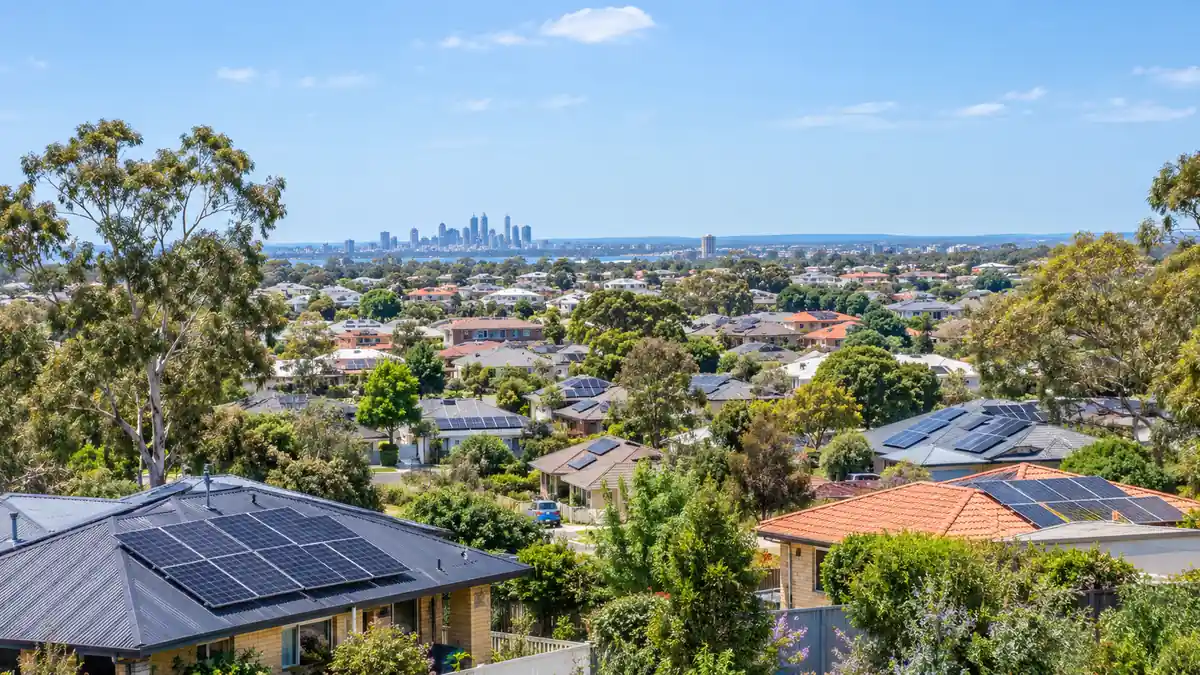
Western Australia’s main grid is isolated. Unlike the east coast, it cannot lean on neighbouring states when supply and demand fall out of balance. Rooftop solar is now so widespread that, on mild, sunny spring and autumn weekends, it can push demand from the grid to very low levels. The State Government notes that about one in three WA households have rooftop solar.
AEMO data shows how quickly this is moving. A new minimum unscheduled operational demand record of 449 MW was set at 12:05pm on 27 September 2025. Only 384 MW of battery charging kept operational demand at a more manageable 833 MW. Less than a month later, at 12:10pm on 23 October 2025, rooftop solar supplied a record 66.8% of the SWIS in a single interval.
| Measure | Figure | Source |
|---|---|---|
| Minimum demand record (WEM), September 2023 | 595 MW | Energy Policy WA DER Roadmap progress report |
| AEMO’s minimum demand threshold for safe operation | 500 – 600 MW | Energy Policy WA DER Roadmap progress report |
| Minimum unscheduled operational demand, 27 Sep 2025 | 449 MW | AEMO WA Real-Time Market forum, Oct 2025 |
| Battery charging during that interval | 384 MW | AEMO |
| Rooftop PV share of SWIS, 23 Oct 2025 (12:10pm) | 66.8% | AEMO |
| Emergency Solar Management capacity (April 2024) | Over 120 MW | Energy Policy WA |
In AEMO’s FY2026 Engineering Roadmap report, it warns that without support from scheduled loads such as big batteries, or the use of Emergency Solar Management to turn down rooftop PV, minimum operational demand across the whole SWIS could fall to zero by 2029. That is the core reason the new rules exist: to keep adding solar safely, the grid needs a way to manage it in rare emergencies and, over time, to pay customers for flexible exports.
What is Emergency Solar Management?
Emergency Solar Management (ESM) is a last-resort tool that lets your retailer turn rooftop solar down or off for a short period when the grid is at risk. It has applied to most new Synergy DEBS systems of 5 kW or less since February 2022. Energy Policy WA reported that ESM had grown to reliably offer over 120 MW of generation reduction by April 2024, and that it had not yet been called upon in an emergency at that time. In South Australia, the equivalent measure was used once in its first year, for about an hour.
Your export options under the new WA solar rules
When your installer commissions a new or upgraded system, you effectively choose between two paths. Synergy, which is the retailer for almost all residential customers using less than 50 MWh a year, will use the open CSIP-AUS standard (Common Smart Inverter Profile – Australia) to communicate with compatible inverters.
| Managed (connected) system | Fixed export limit | |
|---|---|---|
| How it works | Inverter stays online and can be remotely disconnected and reconnected by your retailer | Site export is capped at 1.5 kW at the connection point |
| Export limit | Set by your retailer agreement and network conditions (Western Power lists 1.5 kW to 5 kW for larger systems with an offtake agreement) | 1.5 kW, regardless of inverter size |
| Ongoing internet connection | Required | Not required after installation testing |
| Future flexible exports and VPPs | Ready to opt in | Possible later if the site meets connectivity requirements |
| Best suited to | Homes wanting to export more or join a virtual power plant | Homes with weak internet, or those using nearly all of their own solar |
Energy Policy WA describes the 1.5 kW limit as a buffer that minimises grid imports when your usage fluctuates, such as when you switch on an appliance. Customers can opt in and out of export products at any time, because every new system shares the same minimum functionality regardless of make or model.
Installer tip: Western Power applies export limits net at the connection point, not per inverter or per phase. A well-designed system uses that to its advantage by soaking up midday solar with a battery, hot water or EV charging before anything reaches the limit.
Synergy tariffs and DEBS rates for 2026 – 27
The economics of rooftop solar in Perth come down to the gap between what you pay for grid power and what you earn for exports. Synergy’s regulated prices rose from 1 July 2026, while the DEBS and REBS buyback rates did not change.
| Synergy plan / rate (inc. GST) | From 1 July 2025 | From 1 July 2026 |
|---|---|---|
| Home Plan (A1) electricity charge | 32.3719c/kWh | 33.2621c/kWh |
| Home Plan (A1) supply charge | 116.0505c/day | 119.2419c/day |
| Midday Saver super off-peak (9am – 3pm) | 8.6151c/kWh | 8.8520c/kWh |
| Midday Saver peak (3pm – 9pm) | 53.8446c/kWh | 55.3253c/kWh |
| Midday Saver off-peak (9pm – 9am) | 23.6916c/kWh | 24.3431c/kWh |
| Midday Saver supply charge | 129.2269c/day | 132.7806c/day |
| DEBS export, 3pm – 9pm | 10c/kWh | 10c/kWh |
| DEBS export, all other times | 2c/kWh | 2c/kWh |
On the A1 plan, every kilowatt-hour you use yourself instead of buying from the grid is worth about 33.26c. The same kilowatt-hour exported at midday earns just 2c, which is roughly one sixteenth of the value. Even in the 3pm – 9pm DEBS window, an exported unit earns 10c, less than a third of what it saves you to use it at home. That is why self-consumption, not export, now drives payback for most Perth homes, with or without the new 1.5 kW limit.
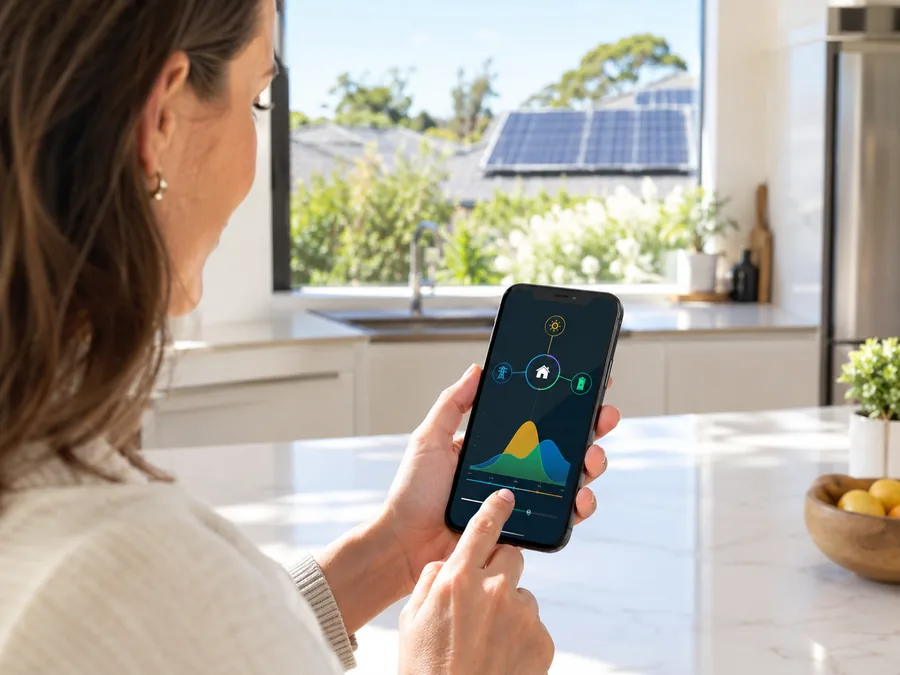
Synergy’s Midday Saver plan is built for solar and battery owners. Power bought between 9am and 3pm costs 8.8520c/kWh, but the 3pm – 9pm peak is 55.3253c/kWh. Households that can run the dishwasher, washing machine, pool pump and EV charger during the day, and cover the evening with a battery, can do very well on it. Homes with heavy evening use and no battery may be better off staying on A1.
How to size solar and batteries under the new WA solar rules
The jump to a 30 kVA limit does not mean every home should install 30 kW of panels. With a 1.5 kW export cap or a modest flexible export limit, an oversized array without a plan for the extra energy simply gets curtailed. Here is how we approach sizing for residential solar in Perth and Geraldton:
- Start with your bills. Look at daily usage and, ideally, interval data from Western Power. Evening usage is what a battery needs to cover.
- Match solar to daytime load plus battery charging. Energy that fills a battery is worth the full grid price later in the evening, rather than 2c exported at noon.
- Consider panel orientation. Synergy suggests west-facing panels can help catch afternoon sun and the 3pm – 9pm DEBS peak window.
- Think about electrification. A heat pump hot water system, induction cooking or an EV can absorb midday solar that would otherwise be limited.
- Plan for the export path you want. If you want to join a VPP or flexible export product later, choose a CSIP-AUS compatible inverter on Synergy’s Supported Solutions List and a site with reliable internet.
If a battery is part of your plan, Synergy’s Battery Rewards offer pays a 70c/kWh activation credit during events, capped at your battery capacity per event, on top of your normal tariff. Our home battery storage options page explains how different batteries suit typical Perth evening loads.
“These changes will provide customers with larger solar and battery systems the opportunity to participate in new retailer products in the future, such as virtual power plants and flexible exports, and get more value by providing services to the grid.”
Energy Policy WA, New requirements for small-scale solar and battery systems
Businesses and larger sites
For small businesses on a standard connection, the 30 kVA aggregate limit opens up larger systems without a more complex connection process. Businesses tend to use more power during the day, so they often self-consume most of their solar anyway, which makes the 1.5 kW export cap less of a constraint. See our commercial solar solutions for how we approach sizing for workshops, offices and farms.
Geraldton and Mid West homes
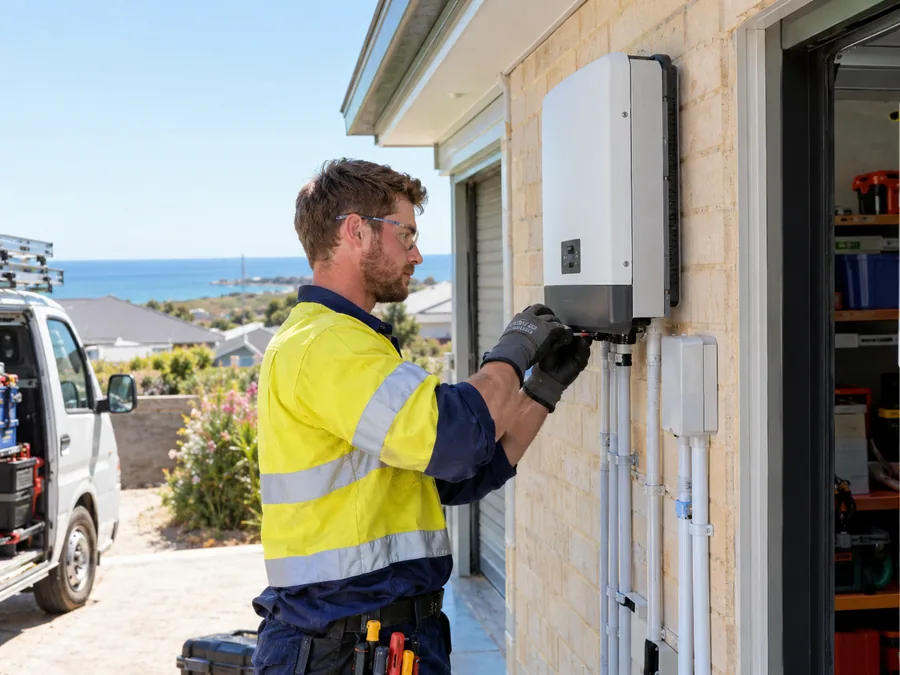
Geraldton is connected to the SWIS, which means the same 1 May 2026 rules, Synergy tariffs and DEBS rates apply to most Geraldton households as to Perth Metro homes. The Mid West has strong year-round sunshine, so the question is rarely whether panels will generate enough. It is whether you can use that energy at home. Coastal homes also face salt exposure, so regular inspection matters for long-term output. Our solar maintenance and repairs team services systems across Geraldton and Perth.
Checklist: installing solar under the new rules
- Confirm your inverter and battery are on Synergy’s Supported Solutions List.
- Check the inverter is AS/NZS 4777.2:2020 compliant and set to Australia Region B.
- Decide whether you want a managed system (flexible exports and VPP ready) or a fixed 1.5 kW export limit.
- Make sure there is reliable Wi-Fi or a wired connection at the inverter if you choose a managed system.
- Ask your installer to complete capability testing at commissioning, as required for all systems from 1 May 2026.
- Review whether A1 or Midday Saver suits your household, and register for DEBS if you are eligible.
- Use our solar savings calculator to compare system sizes before you commit.
Frequently asked questions
Do the new WA solar rules affect my existing system?
No. Energy Policy WA says customers with solar and battery systems installed or upgraded before 1 May 2026 are not impacted. The rules apply when you install a new system or upgrade an existing one.
Will my solar be switched off often?
Emergency Solar Management is a last-resort tool for rare low-demand events, usually on mild, sunny days. Energy Policy WA reported it had not been called upon in an emergency as of mid-2024. Your own use of your solar and battery is not affected.
What happens if I do not have reliable internet?
You can choose the fixed 1.5 kW export limit. Your system must still pass capability testing at installation, but it does not need to stay connected afterwards.
Can I really install 30 kW on a single-phase home?
The limit is 30 kVA of total inverter capacity on a standard connection, which is an increase of 15 kW for single-phase sites. Export limits and network conditions still apply, so the right size depends on how much energy you can use or store.
How much does Synergy pay for exported solar?
Under DEBS, Synergy pays 10c/kWh for exports between 3pm and 9pm and 2c/kWh at all other times, for the first 50 kWh each day. These rates did not change on 1 July 2026.
Is a battery worth it under the new rules?
With A1 grid power at 33.26c/kWh and midday exports earning 2c/kWh, storing solar for evening use is far more valuable than exporting it. Payback depends on your usage, system cost and any battery rebates you qualify for, so get a site-specific quote.
Get a system designed for the new WA solar rules
Our master electricians design and install solar and battery systems across Geraldton and Perth Metro, sized around how you actually use power and set up correctly for remote management or export limits. Talk to our team or request a free quote below.
Sources
- Energy Policy WA – New requirements for small-scale solar and battery systems
- Energy Policy WA – Requirements for solar and batteries: information for consumers
- Energy Policy WA – Information for installers and retailers
- Energy Policy WA – Emergency Solar Management
- Energy Policy WA – DER Roadmap Third Progress Report (July 2024)
- AEMO – WA Real-Time Market Industry Insights Forum (October 2025)
- AEMO – Engineering Roadmap FY2026 Priority Actions Report
- Synergy – Rates and tariffs from 1 July 2026
- Synergy – DEBS buyback rates
- Synergy – DER industry resources
- Western Power – Technical requirements and standards FAQs
Figures current as at 16 October 2026. Tariffs are Synergy regulated residential prices including GST. This article is general information, not financial advice.